Launch and Ascent
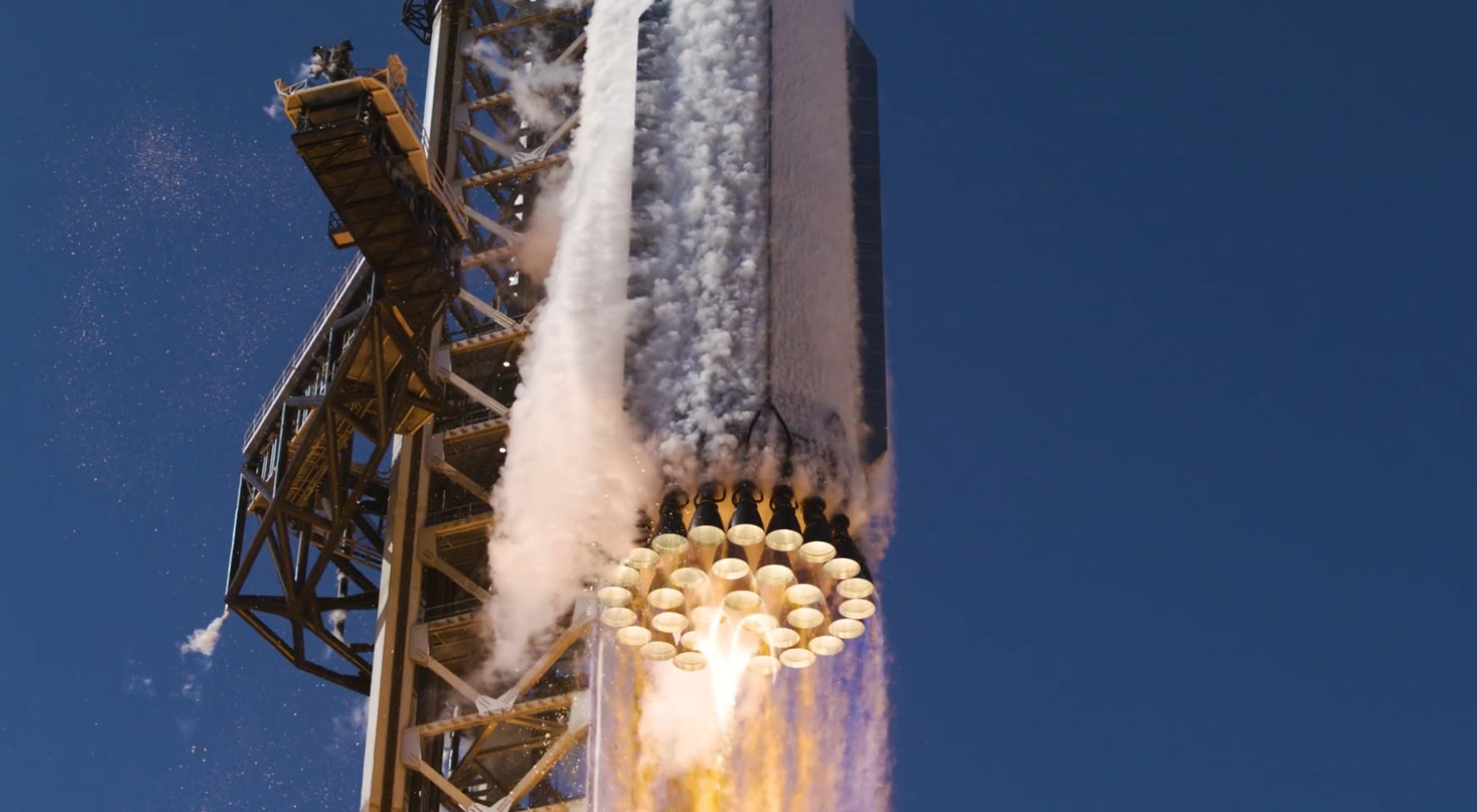
Liftoff occurred at 5:51 p.m. CT from Starbase’s Pad B. The booster’s 33 engines performed powerfully during ascent, propelling the fully stacked Starship (standing roughly 40 stories tall) through Max Q, the period of peak aerodynamic stress.
Hot-staging followed successfully around T+2:21, with Starship’s six Raptor engines igniting before separation from the booster. This maneuver allows for efficient stage separation and has become a reliable part of Starship operations.
Booster Performance
The Super Heavy booster executed a boostback burn, lighting all 33 engines for the high-thrust portion — a first for a V3 booster — before shutting down early. It then attempted a landing burn, but only a subset of engines successfully relit. As a result, the booster experienced a hard splashdown in the Gulf of Mexico rather than a softer, more controlled impact.
Engine reliability and startup timing under various conditions remain key focus areas for future flights, especially as SpaceX works toward tower catches of the booster.
Starship Upper Stage Successes
The upper stage performed exceptionally well. After a full-duration burn, it reached its planned trajectory and deployed 20 next-generation Starlink V3 satellites — the first time this upgraded satellite design has flown on Starship. SpaceX confirmed successful communication with all satellites via radio frequency and laser links, and downloaded telemetry data.
Starship also demonstrated an in-space Raptor engine relight, a critical capability for future orbital and deep-space missions. During reentry, it gathered valuable data on its heat shield tiles under higher dynamic pressures, showing noticeable improvements. It executed a banking maneuver to simulate future return-to-Starbase trajectories before guiding itself to the Indian Ocean via its four flaps.
In a highlight of the mission, Starship achieved what SpaceX described as its softest splashdown yet. After relighting three Raptor engines, it performed a landing flip and burn, descending to a controlled, intact touchdown on the ocean surface where it came to rest belly-up. This provided the first clear views of an intact heat shield post-reentry.
Significance and Next Steps
Flight 13 achieved several key objectives: successful deployment of operational Starlink V3 payloads, in-space engine relight, advanced heat shield testing, and the gentlest Starship ocean landing to date. While the booster’s landing burn was only partially successful, the wealth of data collected advances SpaceX’s goal of rapid reusability.
Elon Musk and the SpaceX team have indicated that, pending data review, the next flight could target a tower catch of the booster or even the ship. NASA Administrator Jared Isaacman and others have praised the rapid progress, noting Starship’s growing role in enabling ambitious human exploration goals.
The high-speed engine ignition video shared by SpaceX perfectly captures the raw power and engineering ambition behind the program. With each flight, Starship edges closer to transforming access to space.As development continues at Starbase, the world watches eagerly for Flight 14 — and the first successful catches that could herald the era of truly routine, reusable super-heavy lift.
“The best teams treat their platform like a product, not a project.”
Get the next one in your inbox
Comments
Loading comments…